
9 Best Shopify App Abandoned Cart Apps (2026 Guide)
TL;DR
Seven out of ten Shopify carts get abandoned before checkout. The right recovery app depends on your existing stack, your primary sales channel, and your budget, not the longest feature list. Klaviyo wins for data-driven stores with agency support, Omnisend is the best self-managed multi-channel option, and WhatsApp apps like Carthike are essential for India and D2C markets. This guide breaks down nine apps by channel, pricing, and honest tradeoffs so you can pick the one that actually fits.
Why Your Shopify Store Needs an Abandoned Cart App
According to the Baymard Institute, the average cart abandonment rate across ecommerce sits at 70.22%, calculated from 50 different studies. Shopify stores perform slightly better (67-70%), thanks to optimized checkout, but that still means roughly two out of three shoppers leave without buying.
The cost is staggering. Ecommerce retailers lose approximately $18 billion per year to cart abandonment. The single biggest reason? 48% of shoppers bail when extra costs like shipping, taxes, or fees push the total higher than expected.
Here’s what most articles get wrong: they treat this as a single-app problem. Cart recovery in 2025 isn’t about finding one app with the longest feature list. It’s about choosing the tool that fits inside the retention stack you already have (or plan to build). The app that already owns your customer data, controls message timing, and coordinates email, SMS, and onsite prompts without creating duplicate logic across tools will outperform a standalone recovery plugin every time.
Before comparing apps, there’s a critical distinction most store owners miss.
If you’re already losing revenue to weak email flows, get a free ecommerce audit before installing another app.
Abandoned Cart vs. Abandoned Checkout: A Distinction That Matters
In Shopify’s data model, “abandoned cart” and “abandoned checkout” are two different events. What most people call an abandoned cart is actually an abandoned checkout, where a shopper entered the checkout flow and left before paying. A true cart abandonment happens earlier: someone adds items to their cart but never starts checkout at all.
This matters for app selection. Practitioners on the Klaviyo Community confirm that the default Klaviyo abandoned cart flow triggers on the “Checkout Started” event, while the “Added to Cart” flow targets more casual browsers. If you don’t set up both, and suppress correctly between them, you’re either missing a huge chunk of abandoners or blasting people with duplicate messages.
Keep this distinction in mind as you evaluate the apps below.
Quick Comparison Table
App | Primary Channel | Starting Price | Free Plan | Shopify Rating | Best For |
|---|---|---|---|---|---|
Klaviyo | Email + SMS | $20/mo (500 contacts) | Yes (250 contacts) | 4.5★ (2,570) | Agency-managed stores needing deep segmentation |
Omnisend | Email + SMS + Push | $16/mo (500 contacts) | Yes (500 emails/mo) | 4.8★ (2,000+) | Self-managed multi-channel simplicity |
Postscript | SMS | Free + $0.015/SMS | Yes (pay per message) | 4.8★ | US stores wanting dedicated SMS |
TxtCart | SMS (AI conversational) | $29/mo | Free trial | 4.9★ (337) | Two-way AI SMS conversations |
Carthike/CK | $9.99/mo | No | 4.9★ | India/Asia WhatsApp-first stores | |
Brevo PushOwl | Push + Email + SMS | Free (500 push/mo) | Yes | 4.8★ (1,804) | Recovering anonymous visitors |
Recapture | Email + SMS | Free tier available | Yes | 5.0★ (64) | Founder-run stores wanting fast setup |
Retainful | Email + Coupons | Free (300 emails/mo) | Yes | 4.7★ (30) | Budget email recovery with dynamic coupons |
Shopify Email | Free (10K emails/mo) | Yes | 4.7★ (3,346) | Brand new stores under 100 orders/month |
How to Choose: Channel, Budget, and Stack
Don’t start by comparing features. Start by answering three questions:
What channel does your audience use? If you sell in the US, email and SMS dominate. If your customers are in India, Southeast Asia, or Latin America, WhatsApp is the primary channel. In India, email open rates hover between 15% and 20%, while WhatsApp messages see open rates above 95%.
What tools do you already run? If you’re already on Klaviyo, use its native abandoned cart flows rather than adding a separate app. If you have no ESP at all, Omnisend gets you email, SMS, and push in one install. For a detailed breakdown of both platforms, see this Omnisend vs Klaviyo comparison.
What’s your monthly order volume? Stores under 100 orders/month can start with Shopify’s built-in email. Once you cross that threshold, the ROI from a dedicated tool pays for itself quickly. A well-built abandoned cart flow recovers 5 to 11% of abandoned checkouts and contributes 3 to 8% of total store revenue once mature.
With that framework in mind, here are the nine best Shopify apps for abandoned cart recovery, organized by channel.
Best Email-First Abandoned Cart Apps
1. Klaviyo
Best for: Data-driven stores doing $50K+/month that want deep segmentation and agency-managed flows.
Klaviyo is the default choice for serious Shopify stores, and for good reason. Its native Shopify integration pulls checkout data, product views, collection visits, and purchase history into a single customer profile. That data powers conditional branching by cart value, customer segment, product type, and more.
Pricing:
Free: up to 250 active profiles, 500 emails/month, 150 SMS credits
Email plan: ~$20/mo at 500 contacts, $30 at 1,000, $100 at 5,000, $400 at 25,000
Email + SMS: starts at $35/mo with 1,250 SMS/MMS credits
Key features:
Abandoned cart and checkout flows with dynamic product blocks
Conditional branching by cart value, customer segment, and product type
Predictive analytics (expected next order date, lifetime value scoring)
A/B testing on subject lines, send times, and discount amounts
Klaviyo’s own research from thousands of ecommerce customers shows that 2-3 abandoned cart messages deliver optimal performance
Real user perspective: Klaviyo holds a 4.5-star rating with 2,570 reviews on the Shopify App Store. Community members describe it as “the ‘no one gets fired for picking them’ choice.” A key piece of practitioner advice from the Klaviyo Community: make sure your Browse Abandonment flow excludes cart and checkout abandonment so you’re not sending multiple emails for the same session.
Tradeoffs:
Pricing scales steeply. The jump from 10,000 to 25,000 profiles represents a 167% cost increase, and G2 reviews consistently flag this as the main concern.
In 2025, Klaviyo shifted billing from “contacts emailed” to “all active profiles,” meaning every browsing visitor counts toward your bill whether you email them or not.
No annual discount on self-serve plans. Requires disciplined list hygiene.
The gap between a poorly built flow (8-12% recovery) and a well-built one (20-25% recovery) is enormous. This is where professional configuration matters.
A well-configured Klaviyo flow typically recovers $8-15 per abandonment, compared to $3-5 with Shopify’s default email. For a detailed walkthrough, see our Klaviyo abandoned cart flow strategy.
2. Omnisend
Best for: Self-managed Shopify stores doing $10K-$100K/month that want email + SMS + push without hiring an agency.
Omnisend hits the sweet spot between power and simplicity. It combines email, SMS, and push notifications in one platform, with abandoned cart recovery as one of its strongest features. The one-click cart flow setup and built-in Product Picker that pulls items from your Shopify catalog make it genuinely fast to get running.
Pricing:
Free: 500 emails/month
Standard: from $16/month
Pro: from $59/month
At 5,000 contacts, Omnisend costs around $70/month vs. roughly $100/month on Klaviyo
Key features:
Email, SMS, and web push in a single platform
One-click abandoned cart automation setup
Split-testing on delays, subject lines, and discount amounts
Product Picker pulls items directly from your Shopify catalog
Pre-built automation templates for common flows
Real user perspective: Nearly 90% of Omnisend’s Shopify reviews are 5-star. Many store owners land here after trying Klaviyo and deciding the complexity wasn’t worth the cost for their current stage.
Tradeoffs:
Not as powerful for advanced segmentation, though it covers about 80% of what most stores need
Multiple merchants have reported the $16/month entry price growing to $500+/month at higher contact tiers without clear upfront communication
Fewer native integrations with advanced analytics tools compared to Klaviyo
If you’re weighing which platform to build your ecommerce email automations on, Omnisend’s simplicity is a genuine advantage for lean teams.
3. Retainful
Best for: Budget-conscious stores wanting email cart recovery with dynamic coupons and no learning curve.
Retainful’s standout feature is its dynamic coupon engine, which generates unique, time-limited discount codes per abandoned cart. This prevents the “I’ll just wait for the coupon” behavior that plagues stores using generic codes.
Pricing:
Free: 300 emails/month
Paid plans: $14-$19/month
Key features:
Drag-and-drop email workflow builder
Dynamic coupon codes (unique per abandoner, with expiration)
Cross-platform support for both Shopify and WooCommerce
Post-purchase engagement flows beyond just cart recovery
Real user perspective: Users report it’s become one of the most important tools in their customer retention strategy, praising simplicity of execution from abandoned cart recovery to post-purchase engagement.
Tradeoffs:
Only 19 reviews on the Shopify App Store, signaling a much smaller user base than competitors
Limited SMS and WhatsApp capabilities
Not suitable for complex multi-flow setups or deep segmentation
Best for stores that need email-only recovery and nothing more
4. Shopify Email (Built-In)
Best for: Brand new stores under 100 orders/month that aren’t ready to invest in a dedicated ESP.
Shopify Email is already inside your admin panel. It sends one automated recovery email to abandoned checkout customers, and it’s free for your first 10,000 emails per month ($1 per 1,000 after that). For a store just getting started, this is enough to capture the lowest-hanging fruit.
Pricing:
Free: up to 10,000 emails/month
$1 per 1,000 additional emails
Key features:
Built into Shopify admin (minimal setup)
Automated recovery email for abandoned checkouts
Basic email templates with Shopify branding
Real user perspective: Rated 4.7 stars with 3,346 reviews. Widely used as a baseline. Merchants typically upgrade once revenue justifies a dedicated platform.
Tradeoffs:
Single email only: no sequences, no SMS, no conditional branching
No dynamic product blocks or A/B testing
No way to differentiate messaging by cart value, customer type, or product
Recovery rates are roughly half what a well-tuned 3-email sequence achieves
The average single cart recovery email recovers 3-5% of abandoned carts. A well-tuned 3-email sequence reaches 10-15%. That gap represents real money. If you’ve outgrown Shopify Email and want to understand the full scope of what’s possible, our guide to email flows that increase revenue covers the complete picture.
Best SMS-First Abandoned Cart Apps
SMS open rates hit 98% compared to roughly 40% for email, making SMS recovery 2-3x more effective per send. The multi-channel approach (SMS + email) recovers 15-25% of abandoned carts, which is 2-3x more than either channel alone.
1. Postscript
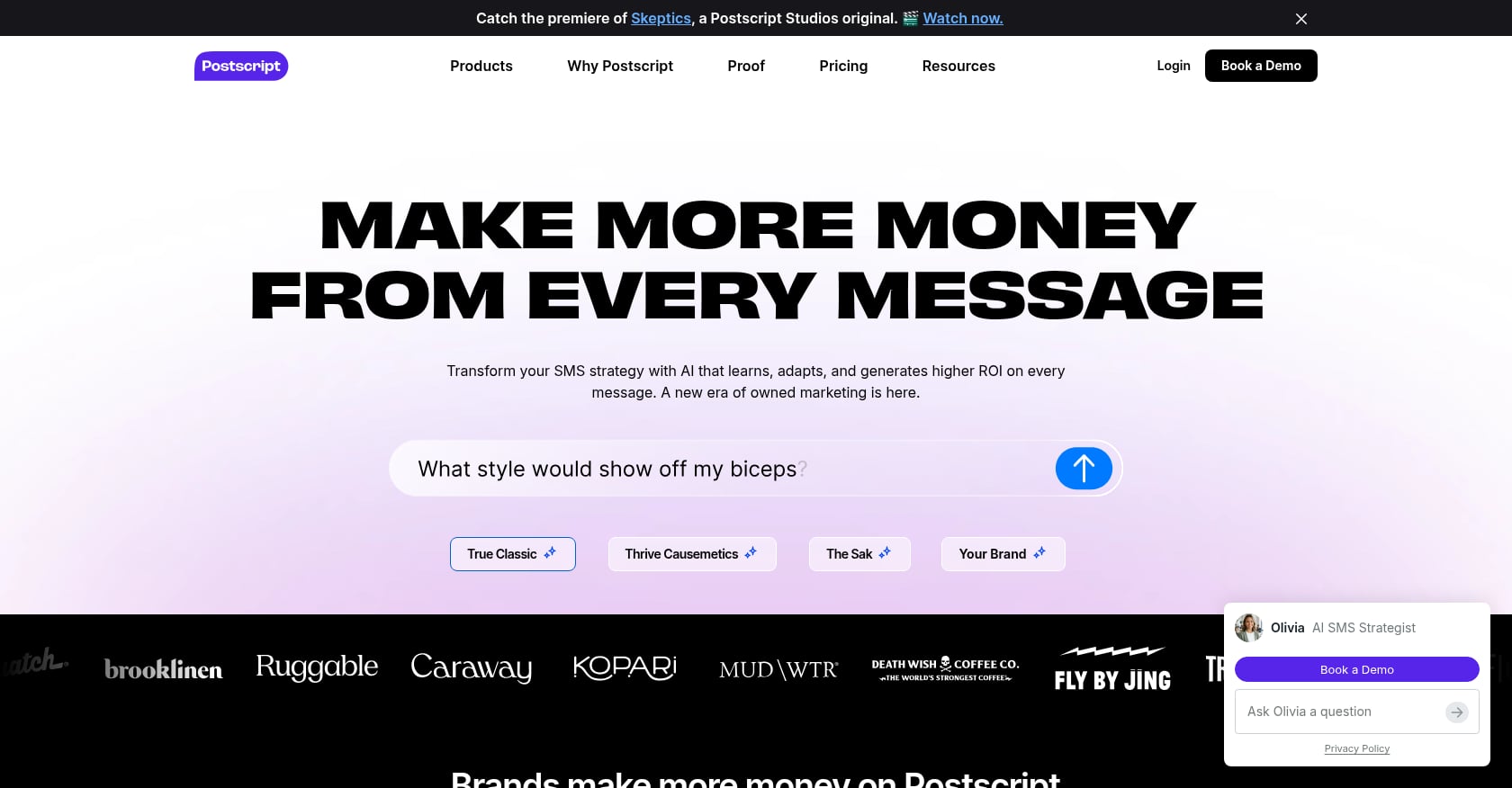
Best for: US-based Shopify stores wanting a dedicated, compliant SMS channel layered on top of their email ESP.
Postscript is built exclusively for Shopify and exclusively for SMS. That narrow focus shows in the quality of its compliance tooling, segmentation engine, and store integration.
Pricing:
Starter: free (pay per message at $0.015/SMS, $0.045/MMS)
Growth: $25/month
Professional: $500/month
Key features:
Deep Shopify integration pulling purchase history, browsing behavior, and customer tags
Visual flow builder for multi-step SMS automations
Automatic quiet hours, opt-out management, and US 10DLC compliance support
Two-way conversational SMS capabilities
Powerful segmentation based on Shopify data
Real user perspective: Practitioners on the Shopify Community forums recommend Postscript for SMS-first recovery specifically because of its two-way conversation capabilities. Brands running SMS abandoned cart sequences through Postscript typically recover 5-12% of abandoned carts through SMS alone.
Tradeoffs:
Shopify-only. Zero support for WooCommerce, BigCommerce, or other platforms.
No email channel. You must pair it with Klaviyo, Omnisend, or another ESP for email recovery.
US-focused with limited international reach.
SMS carries the highest legal exposure in ecommerce. TCPA fines run $500-$1,500 per violation, so compliance isn’t optional.
For a broader look at SMS options and how they fit into your retention strategy, see our SMS marketing options for ecommerce brands.
2. TxtCart
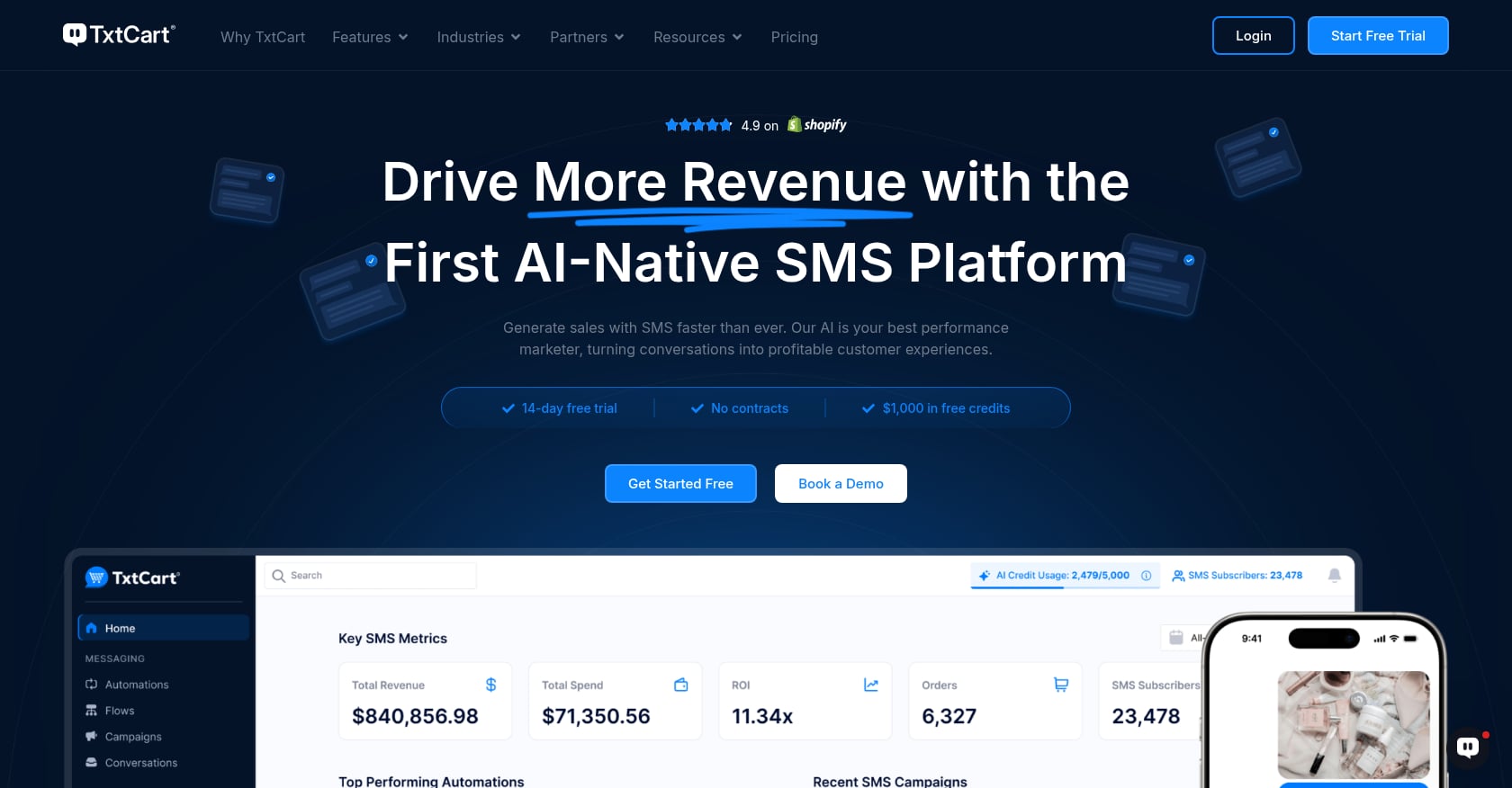
Best for: Shopify stores wanting human-like two-way AI SMS conversations for cart recovery (US market).
TxtCart’s differentiator is conversational AI that engages abandoners like a real person would. Instead of a static “you left something behind” message, TxtCart’s AI responds in real time, handling objections, offering discounts contextually, and guiding shoppers back to checkout.
Pricing:
Free to install with a free trial
Paid plans from $29/month
Pay-per-message model on top of the base fee
Key features:
AI-powered conversational SMS that mimics human sales conversations
Real-time objection handling and contextual discount offers
Claims $100M+ revenue driven across 3,000+ ecommerce brands
Automated recovery flows with personalization
Real user perspective: Rated 4.9 stars with 337 reviews. Merchants report seeing a noticeable increase in recovered sales within just the first few days. One reviewer called it “the best SMS-only option for Shopify stores that want conversational recovery.”
Tradeoffs:
SMS-only. Requires a separate email app for complete coverage.
The pay-per-message model can get expensive for stores sending high-volume campaigns
US-centric with limited international SMS reach
AI conversations, while impressive, occasionally miss nuance on complex customer questions
Best WhatsApp Abandoned Cart App
1. Carthike / CK: WhatsApp Abandoned Cart
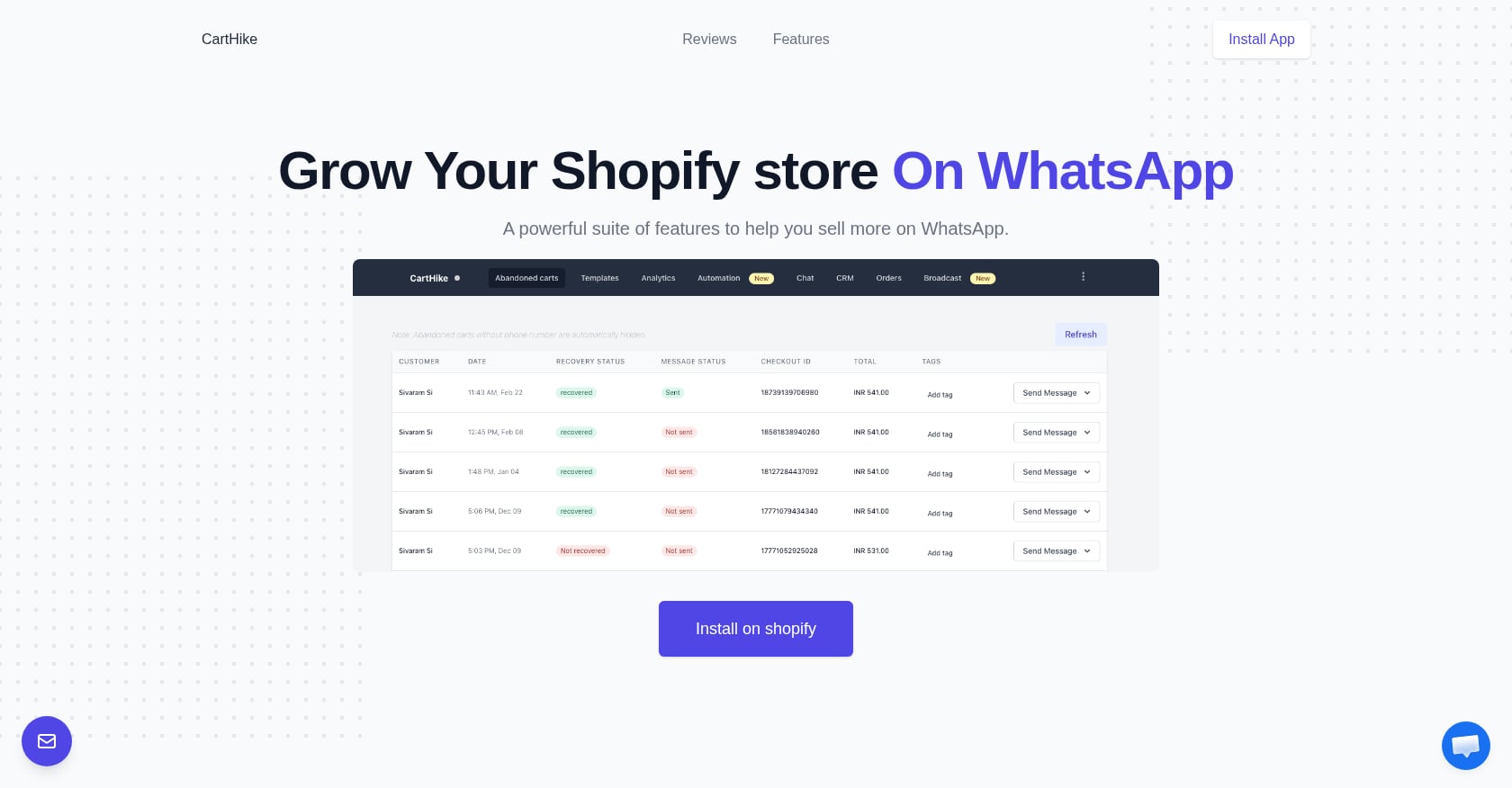
Best for: Shopify stores selling to India, Southeast Asia, the Middle East, or Latin America where WhatsApp dominates daily communication.
In markets like India, WhatsApp isn’t just another channel. It’s the primary channel. WhatsApp is used daily by over 535 million Indians, and messages enjoy open rates above 95% with response rates five to ten times higher than email.
Pricing:
Pro plan at $9.99/month with automated recovery
Additional Meta conversation charges of approximately ₹0.70-0.80 per conversation in India
Key features:
Automated WhatsApp recovery through the Business API
Manual WhatsApp outreach option for personal follow-ups
Smart SMS fallback if WhatsApp delivery fails
COD (cash on delivery) confirmation support, which is critical for Indian D2C
Real user perspective: Rated 4.9 stars. Particularly popular among Indian D2C brands and stores targeting MENA and LATAM markets. Practitioners report that WhatsApp recovery consistently beats email in these regions.
Tradeoffs:
Minimal email capabilities. This is a WhatsApp-focused tool.
Requires WhatsApp Business API setup, which adds a configuration step
Limited audience in US-only markets where WhatsApp adoption is low
Total costs include both the app subscription and Meta’s per-conversation charges
For Indian D2C brands, WhatsApp cart recovery isn’t optional. It’s the foundation of the retention stack. If you’re building out WhatsApp alongside email, choosing the right email agency to coordinate both channels matters more than which individual app you pick.
Best App for Anonymous Visitor Recovery
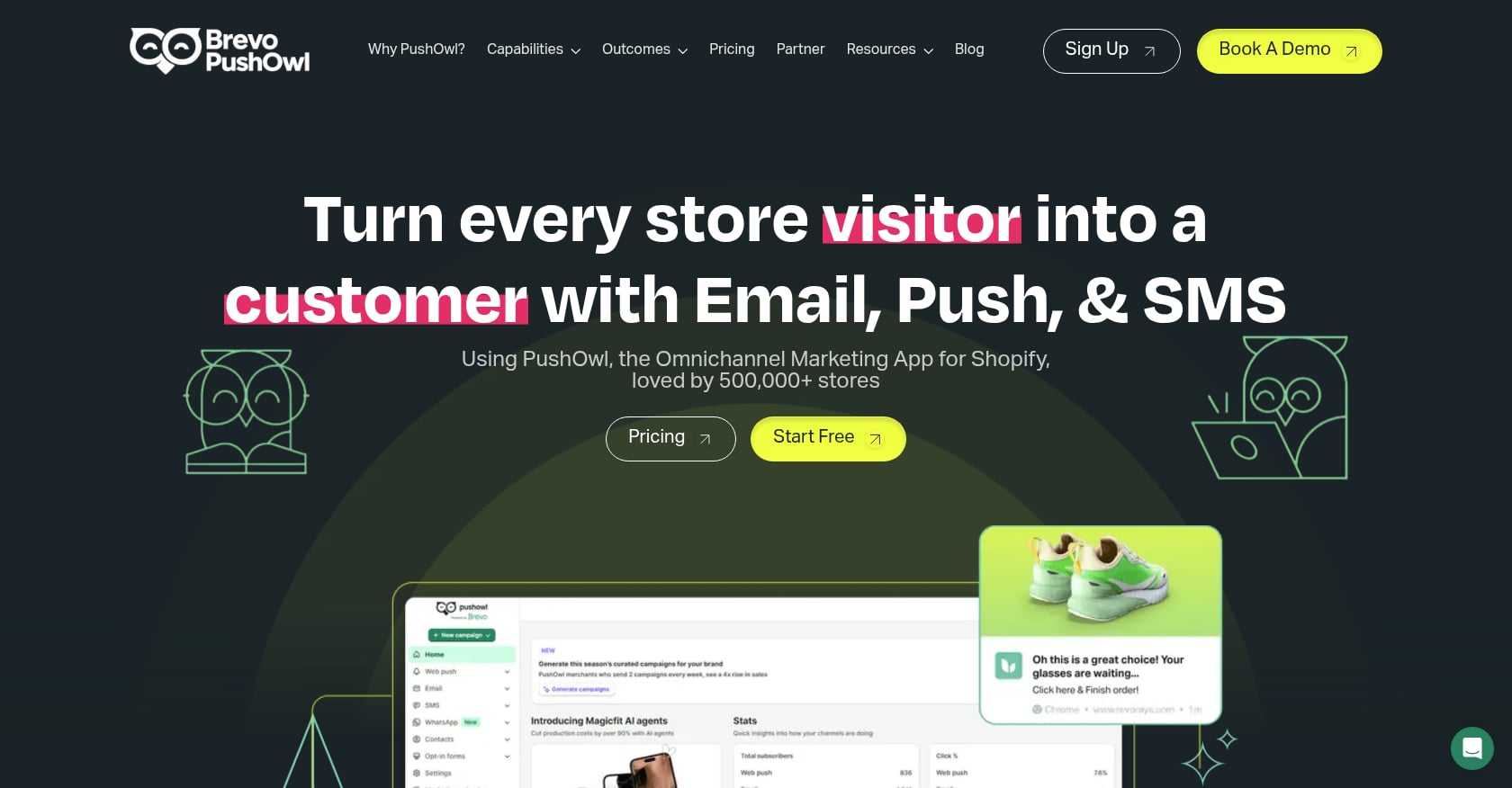
1. Brevo PushOwl
Best for: Recovering anonymous visitors who never provided an email address or phone number.
Here’s the math that makes push notifications interesting: traditional recovery (email, SMS, WhatsApp) only works on the 15-20% of abandoners who gave you contact information. Prevention and push work on 100% of your visitors. Brevo PushOwl captures anonymous store visitors who never fill out a form. A visitor only needs to click “Allow” on a browser prompt, and you can reach them.
Pricing:
Free: 500 web push notifications/month + 500 emails/month, unlimited subscribers
Business plan: $19/month
Power plan: $79/month (required for advanced features like abandoned cart automation)
Key features:
Web push notifications requiring zero contact info from visitors
Combines push, email, SMS, and popups in one Shopify app
Abandoned cart push sequences for anonymous browsers
Simple browser-prompt-based opt-in
Real user perspective: Rated 4.8 stars with 1,804 reviews. User feedback on the Shopify App Store notes “good for push but email features feel basic compared to dedicated ESPs.”
Tradeoffs:
Email depth doesn’t match Klaviyo or Omnisend
Abandoned cart recovery automation requires a paid tier (not available on the free plan)
The price jump from $19 to $79 is steep for what you get
Best used as a complementary tool alongside a dedicated ESP, not as a standalone
Best for Founder-Run Stores
1. Recapture
Best for: Solo founders or small teams that want cart recovery working reliably with minimal setup time.
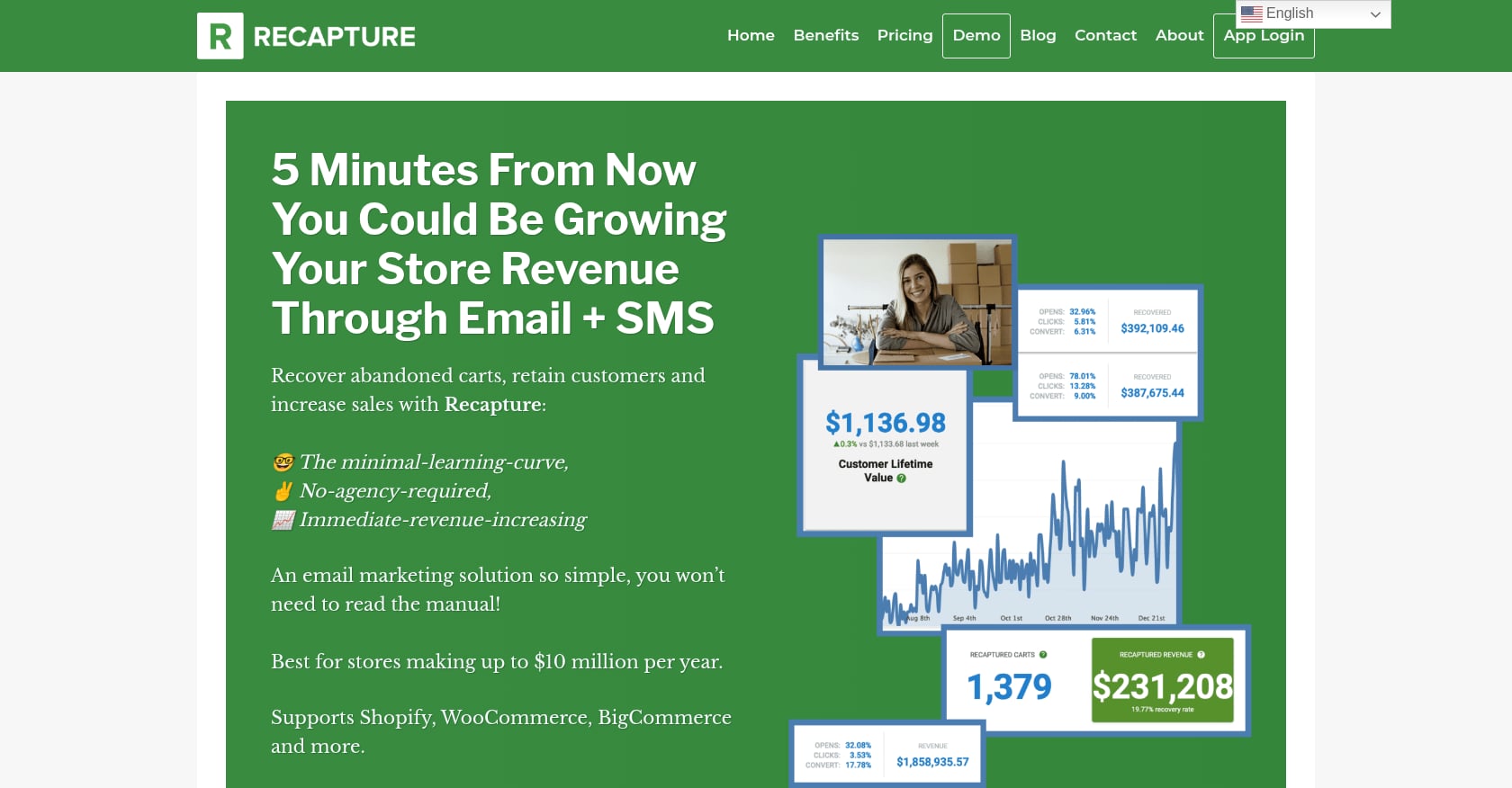
Recapture has been building cart recovery tools since 2015 and claims to have helped stores recover over $340 million in lost sales. Its famous “5-minute install” is genuinely fast, and its AI generates store-specific campaigns in under 60 seconds.
Pricing:
Free plan available
15-day free trial
Paid plans from approximately $29/month
Key features:
Recovers both abandoned carts AND abandoned checkouts with the same campaigns
AI-generated store-specific campaigns
Simple setup that doesn’t require workflow expertise
Email and basic SMS support
Real user perspective: Perfect 5.0-star rating (though with only 64 reviews). A Capterra reviewer noted that “pricing was very transparent compared to competitors” and that competing tools “always seemed to have gotchas” while Recapture avoided those issues.
Tradeoffs:
Smaller feature set compared to full ESPs like Klaviyo or Omnisend
Not ideal for stores needing deep segmentation or predictive analytics
Limited WhatsApp support
The small review count means less community validation compared to larger platforms
The Biggest Mistakes Stores Make with Abandoned Cart Apps
Installing an app is the easy part. Here are the mistakes that quietly kill your recovery rates.
The Duplicate Email Trap
One of the most common issues practitioners report is getting duplicate abandoned cart emails after installing a third-party app. This happens because both Shopify’s default abandoned checkout email and your new app (Klaviyo, Omnisend, etc.) trigger simultaneously on the same event. A user on the Shopify Community shared this exact experience after setting up Klaviyo, and multiple respondents confirmed it’s a widespread problem.
The fix: When you install any third-party cart recovery app, immediately disable Shopify’s built-in abandoned checkout email under Settings > Checkout > Customer Contact.
The Tracking Gap Nobody Talks About
Here’s a practitioner insight that no competing guide covers. A Shopify store called HoneyBalm discovered they were missing 74% of their Add to Cart events. Their “active” abandoned cart flow was triggering for less than 30% of actual abandonment events due to tracking gaps.
This means your chosen Shopify app for abandoned cart recovery might look like it’s working fine while silently missing the majority of real abandonment events. Check your tracking setup. Compare your Shopify analytics cart data against what your ESP reports. If there’s a significant gap, your pixel or integration needs attention. For Klaviyo users, our guide on integrating Klaviyo with Shopify walks through the technical setup that prevents this.
Discounting Too Early
Many stores default to offering a discount in the first recovery email. This trains customers to abandon on purpose. A better approach: lead with the value proposition and social proof in message one, add urgency in message two, and only introduce a discount (if at all) in message three. For more on structuring these sequences, check out our abandoned cart email template guide.
Poor Suppression Logic
If your browse abandonment flow, cart abandonment flow, and checkout abandonment flow don’t properly exclude each other, a single customer can receive three separate email sequences for the same browsing session. This tanks engagement and hurts email deliverability over time. Every flow needs exclusion filters for the flows below it in the funnel.
Why Most Apps Underperform Without Proper Flow Configuration
There’s a meaningful gap between “I installed the app” and “it’s generating real revenue.” The data makes this clear: a poorly built Klaviyo abandoned cart flow recovers 8-12% of abandoned checkouts. A well-built one recovers 20-25%. That’s a 2-3x difference from the same tool, the same contacts, the same product.
The difference comes down to:
Timing: When each message sends relative to the abandonment event
Segmentation: High-AOV carts getting different treatment than low-value ones
Conditional logic: First-time visitors receiving different messaging than repeat customers
Suppression: Making sure purchasers are immediately removed from the flow
Content: Dynamic product blocks, personalized subject lines, and strategic discount laddering
Most Shopify stores install an abandoned cart app, turn on the default flow, and never touch it again. That’s leaving money on the table.
If you want an expert team to configure your flows properly, 360Growth Marketers works with Shopify brands to build retention systems that generate 25-40% of store revenue from owned channels.
FAQ
Do I need a dedicated app, or is Shopify’s built-in email enough?
Shopify’s default email is sufficient for brand new stores under 100 orders/month. It sends a single recovery email with no sequences, no branching, and no SMS. Once your store has enough volume that even small recovery rate improvements translate to real dollars, a dedicated app pays for itself. The average cart recovery email gets 3-5% recovery. A well-tuned 3-email sequence reaches 10-15%.
Can I use multiple abandoned cart apps together?
Yes, and many stores do. A common stack is Klaviyo or Omnisend for email, Postscript or TxtCart for SMS, and Brevo PushOwl for anonymous visitors. The critical requirement is proper suppression logic so customers don’t receive duplicate messages across platforms. Always disable Shopify’s default abandoned checkout email when using a third-party tool.
What recovery rate should I expect from a Shopify abandoned cart app?
For most Shopify stores, a mature abandoned cart flow recovers 5-11% of abandoned checkouts and contributes 3-8% of total store revenue. A multi-channel approach (SMS + email) pushes recovery to 15-25%, which is 2-3x more than either channel alone. The specific number depends heavily on your product, price point, and how well the flows are configured.
Should Indian D2C brands use WhatsApp or email for cart recovery?
WhatsApp should be the primary channel. In India, email open rates sit between 15-20%, while WhatsApp messages see open rates above 95% and response rates five to ten times higher. With over 535 million daily WhatsApp users in India, it’s the default communication channel for most shoppers. Budget for the app cost ($9.99/month for tools like Carthike) plus Meta’s per-conversation charges of approximately ₹0.70-0.80 each.
What’s the difference between abandoned cart and abandoned checkout in Shopify?
An abandoned cart means a shopper added items but never started checkout. An abandoned checkout means they entered the checkout flow (provided an email or phone number) but didn’t complete payment. Most recovery apps trigger on checkout abandonment because that’s when you have contact info. To capture earlier-stage abandoners, you need browse and cart abandonment flows (available in Klaviyo and Omnisend) or push notifications (Brevo PushOwl) for anonymous visitors.
How do I prevent duplicate emails when using Klaviyo with Shopify?
Go to Shopify Admin > Settings > Checkout and disable the automatic abandoned checkout email. Then set up your recovery flow entirely within Klaviyo. Also make sure your browse abandonment, cart abandonment, and checkout abandonment flows have proper exclusion filters so a single customer doesn’t receive messages from multiple flows for the same session.
Which app is best for a store on a tight budget?
Start with Shopify Email (free for 10,000 emails/month) as your baseline. When you’re ready to upgrade, Retainful ($14-$19/month) or Omnisend’s free tier (500 emails/month) offer the best value. Recapture’s free plan is another strong option for founder-run stores that want minimal configuration. Avoid committing to expensive plans until your order volume justifies the investment.
